
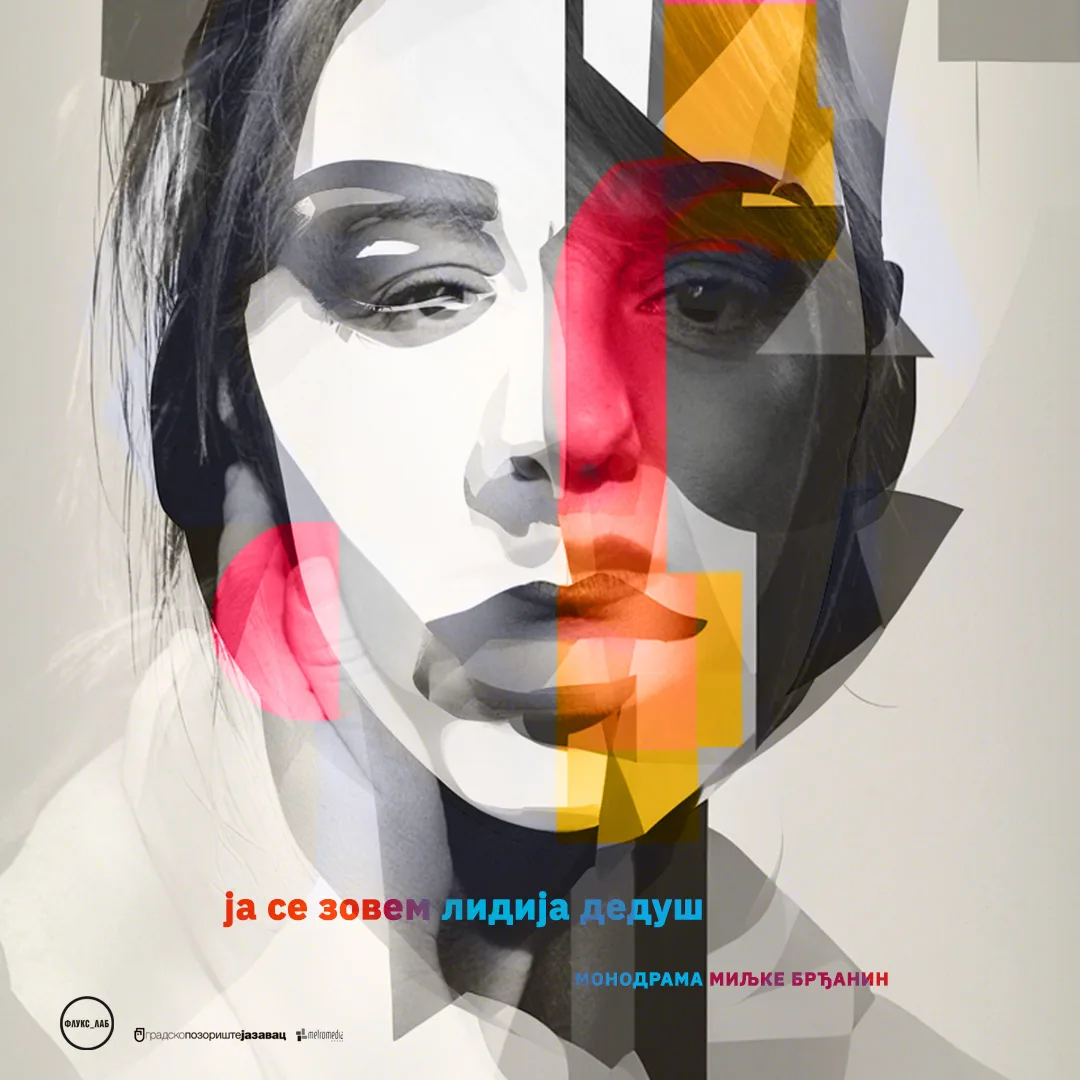
Miljka Brđanin
The play/monodrama “my name is lidija dedush”, based on the work of the same name by Lidija Deduš, uses theatrical means to address questions about a woman's existence. How much, if at all, is the character lidija deduš like the author Lidija Deduš? How much of a person's identity lies in their first and last name? Is the character lidija deduš an exception, or a typical example of a contemporary woman? Modern life drives the individual into cyber-enclosures, creating cyber-souls that want everything instantly: instant knowledge and information, instant food, sex, an instant god, pills, life and even death. By addressing familiar features of the life of the contemporary woman lidija deduš, the play discovers the individual and unique qualities that distinguish Lidija Deduš from every other Lidija. Lidija speaks openly about her life, while the play observes the difference between the transparency of that life and its truth. It discovers the subtlety of her soul by reading the author's signs, leading us from the general to the individual in both character and writing. It is no accident that “my name is lidija dedush” finds its stage form in a monodrama, in which one actress, Miljka Brđanin, shows us Lidija's life. The emphasis on showing points to the absence of any kind of moralising: all of us living here and now need to understand one another, and we need to hear and understand the hidden cry of Lidija Deduš's soul as the hidden cry of all our souls.

Randy King
From an early age, he pursued his dream with tireless passion, undeterred by obstacles, disbelief and the forces that tried to hold him back. Every challenge steeled his resolve, but as he climbed higher, the weight of sacrifice grew heavier. In the end, he stood victorious, yet deeply aware of the immense cost of his journey. His triumph, born of perseverance, revealed the true price of the dream he had pursued.
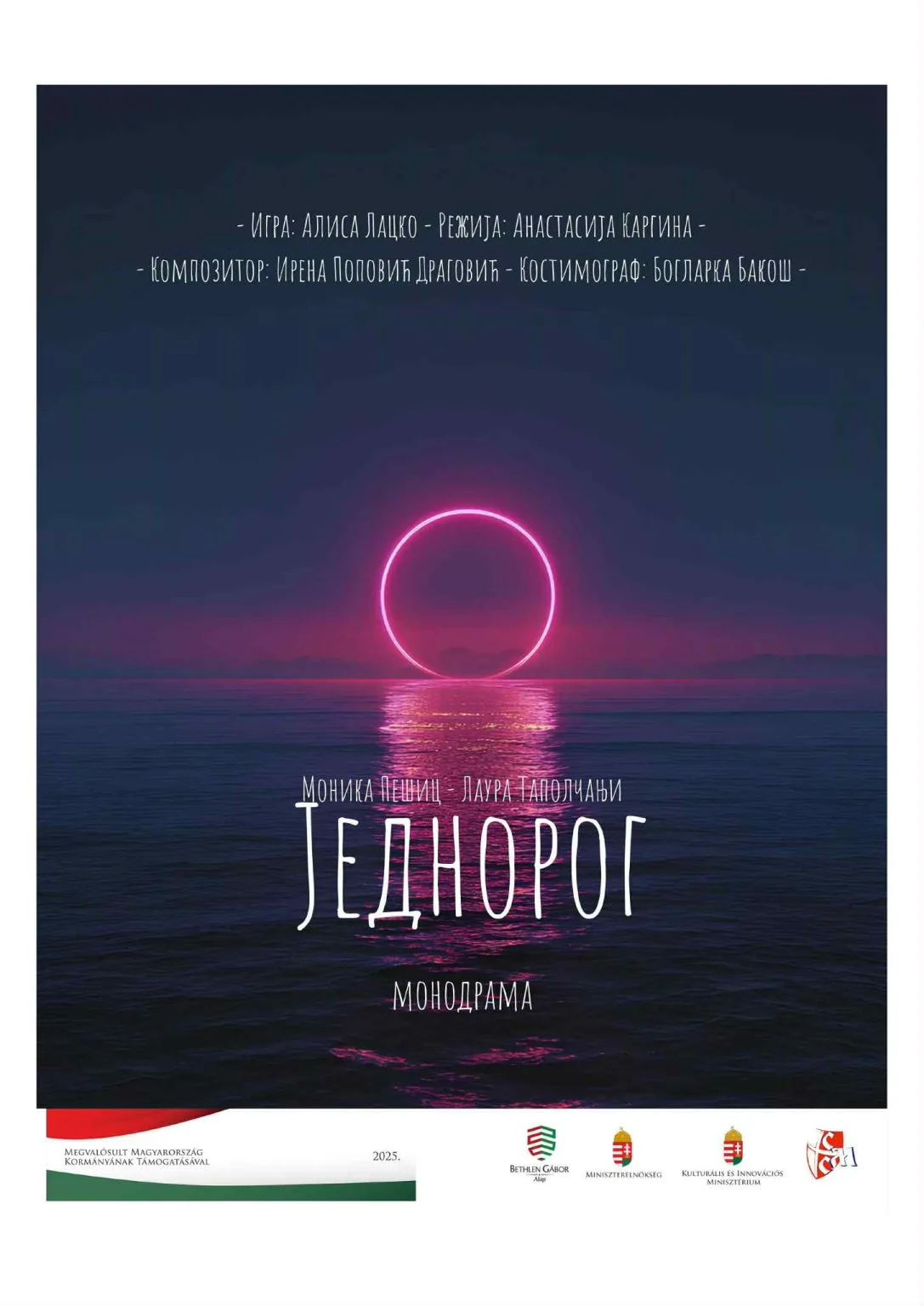
Alisa Lacko
This is a play about an actress. We follow Monika, a character who embodies an affirmation of life and has a gift for bringing tragedy and humour together. With her as our guide, we embark on an exciting journey through a fairy-tale story about a person's fight for life, an artist's fight for life, and life itself fighting to survive. The heroine travels a thorny path full of twists, surprises and terrifying monsters. As the situations change, so does the genre of the play. Just as in life! Encounters with various absurd situations and even more absurd characters complete the picture of the times we live in, giving us hope that all we can do is fight passionately and persistently, to our last breath. Thus a painful story, through an artistic approach, takes on a spirited, engaging, cathartic and, above all, therapeutic form. Our play also brings to life the old saying that life writes dramas, for this is a true story. Born of Monika's wish to tell her story and shaped by writer Laura's engaging and inspired talent, it has become an exciting documentary account of an artist's — an actress's — view of the healthcare system, philosophical questions and the beauty of living. This play celebrates life and defies death through its struggle.
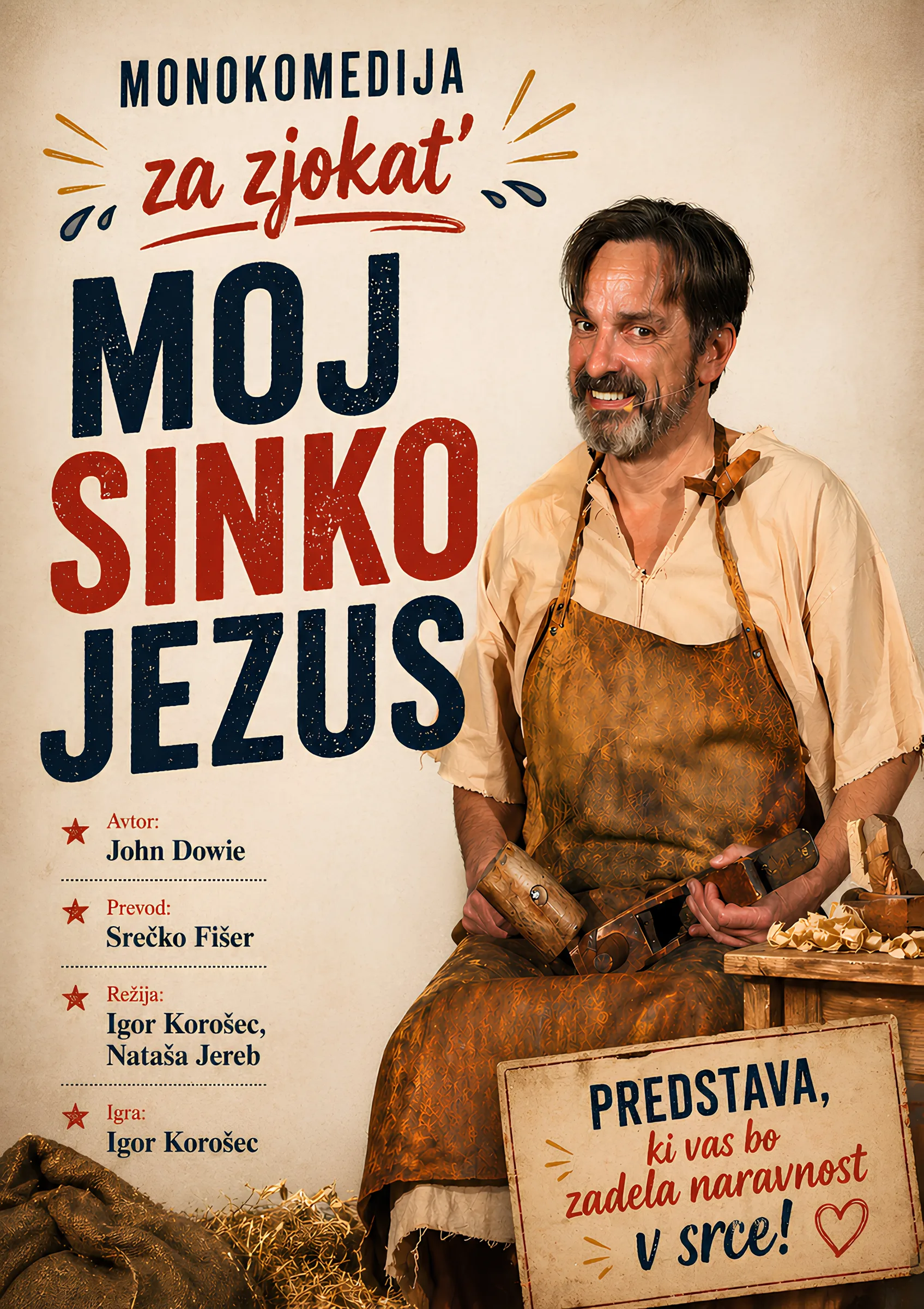
Igor Korošec
What if you heard the story of Jesus for the first time from the perspective of the man who usually stood quietly somewhere in the background of the Nativity scene? My Son Jesus is a moving, witty and provocative monodramedy by British writer John Dowie, in which Joseph — carpenter, husband, father and an entirely ordinary man — tells his truth about family, faith, fear, politics and raising a son whom the world knows as Jesus Christ. In a human, contemporary and often humorous way, the play raises questions that remain relevant today: what does it mean to be a father, how does one live in a world of religious and political extremes, and what does a person do when he realises that his child belongs to the world more than to him? Above all, how does one remain human at a time when everyone around you is looking for a messiah? The text skilfully interweaves humour, irony, family warmth and profound human pain. Joseph is not a saint from a church painting but a flesh-and-blood man: a little cynical, frightened, in love, tired and endlessly human. That is why the play touches believers, non-believers and everyone in between alike — not as a sermon, but as an intimate story of family, love and loss. My Son Jesus is a monodramedy that makes audiences laugh, moves them and stays with them long after the performance.

Tatjana Kecman
Synopsis
This is a story of parallel lives, between Instagram and real life.
A story of a world in which art is measured by the number of followers, where an actress knows that a good filter can sometimes matter more than a good role.
Of hours upon hours spent waiting for an opportunity that never comes. Of long nights when their mothers' words echo in their dreams: ‘You won't have bread to eat. I won't feed you, and you'll have to marry well!’ Through this monodrama we meet different kinds of actresses: an ambitious young hopeful of questionable talent who has decided to become an Instagram star. After all, who still goes to the theatre when they can scroll through a selfie tagged #ArtIsInEverything? A single mum, a freelance artist — the most dangerous kind of actress. She is an acting special-ops unit, an acting MMA fighter! She strikes vital points with fists and elbows... and performs effectively under impossible conditions! An actress who became a mother early. One child, then another — everyone forgot her. A third child — even God forgot her. An actress who raises her vibrations and visualises roles to the point of exhaustion, believing that the universe will eventually show her mercy... There are many of them! Competition is fierce. The most important thing is to survive. There is not much art in it.
A topical and universal story that, with plenty of humour, emotion and brutal honesty, illuminates artistic life on the other side of the lens, where filters do not work and editing cannot hide reality.
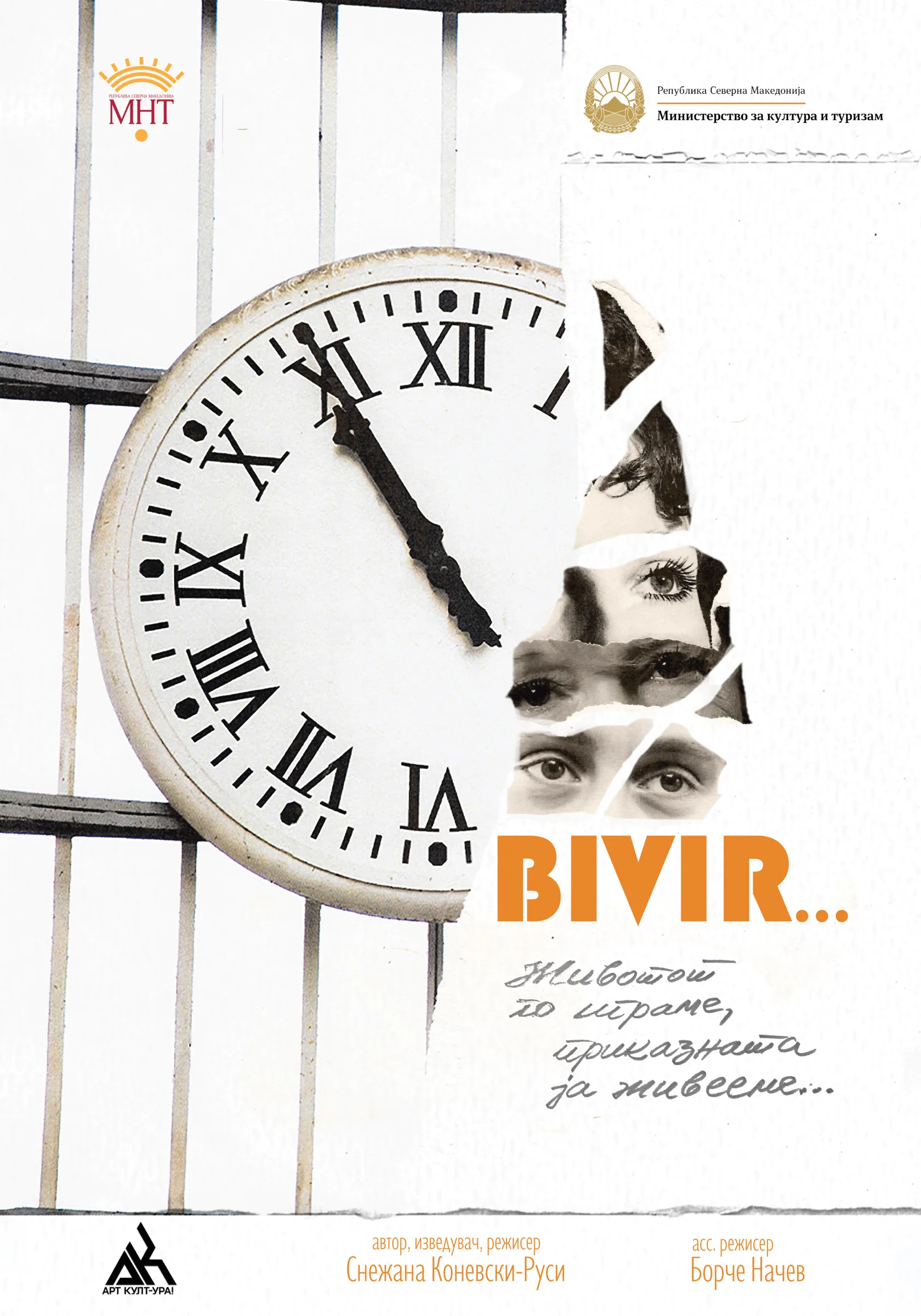
Snežana Konevski Rusi
This is the life story of young Hana Cohen, one of the few Jews saved by their compatriots and thus spared deportation to Treblinka — the fate of 7,100 Jews from Bitola, including members of her family. Hana is one of the few to fulfil the enduring Jewish wish and prayer, ‘Next year in Jerusalem’: she goes to the promised land of Israel, the most sacred place in Judaism and the foundation of the Jewish people's millennia-long existence, a people so often persecuted, expelled, displaced and destroyed. Many years later, Hana, now a grown woman, returns to her home in Bitola. Memories of her childhood return too: games with children from Cigan-mala, family celebrations and customs, up to the fateful day when all the Jews from Čiflik-mala were rounded up, taken away in trucks and railway cars, and imprisoned at Monopol in Skopje. The closeness and friendship between two families — one Jewish, one Roma — leads to Hana's rescue from Monopol. Then comes a period of living and hiding in Cigan-mala under the name Asja, as a member of Grandma Zina's Roma family. She adapts to their way of life — dance, song, constant flight from the enemy, moves from town to village — while their need for freedom of life, body and soul comes to the fore. They live to see the end of the war. Hana is taken in by the Red Cross from Belgrade, lives in a centre for war orphans, is reunited with her mother and continues her education. She meets the young man with whom she decides to spend her life and goes to the homeland of her ancestors, Eretz Israel. Years pass: rare family reunions, countless letters, life in Jerusalem, work, study, military service, becoming a mother, learning Hebrew while forgetting Serbian and Macedonian songs, and returning to the music and language of Spain. Hana's life changes when she learns that her husband has been killed on the battlefield. She must face her loss, go on living, care for her three children, welcome grandchildren, keep telling her story and wish that history could be erased, trying ‘to forgive, but not to forget’. Hana does not forget her family's most important holiday, Shabbat. She hopes for a future reunion on that day and sends greetings to her fellow townspeople scattered across the world. Dramatically, in words and ideas, Hana's story unfolds through scenes from her life at different times and in different places, in different languages — Macedonian, Romani, Serbian and Ladino — and through different musical traditions: a meeting of cultures. These are scenes of life held in the memory of Hana the little girl, young woman, wife, mother and grandmother. The central motto of the Jewish people is to endure, to live, to survive. If you survive, you must tell the story: that is the task, the obligation and the sacred duty.

Benoît Turjman
Short description
‘He is a grumpy nerd, the boy next door... and he lives right beside you!’ With greasy hair and corduroy trousers, a lifelong bachelor, he sends women running and gets into trouble like no one else. Tonight he will try to find love at a singles dinner, survive the harsh wilderness and share the sincere magic of Christmas with his neighbours. But be warned: this clumsy man in search of true love might just charm you. With a smile, The Neighbor draws the audience into a whirlwind of mad mime comedy that will make you happy... forever! A major hit of contemporary pantomime that you will not forget.
Longer description
The Neighbor is a romantic comedy in mime. Through a prologue, three sketches and an epilogue, the play shows part of the life of the Neighbour, a kind of ‘nerd next door’ searching for true love. In his performance, Benoît Turjman takes us through the entertaining life of his unusual character, letting us experience every moment and every awkward mishap without a single spoken word or vocal effect. Elegant music, varied sets and a distinctly French way of storytelling create the feeling of watching a film on a big screen. ‘I wanted to portray everyday life and the social conventions that guide, and sometimes limit, the way we relate to others. To show what can distance us from others, but also what connects us. I wanted to tell all this from the perspective of an entirely ordinary person. Someone who could be our own neighbour. [...] I wanted to bring to the stage many artistic worlds I admire. The world of Martin Parr's photographs, his view of our society and our desires, imbued with humour and tenderness. The worlds of great artists such as Michel Courtemanche and Rowan Atkinson, Harold Lloyd and Marcel Marceau. I wanted the audience to open a comic book and attend a musical at the same time. I wanted them to see all those wonderful worlds. All of them... and somehow the story of my life as well!’ Since its creation, The Neighbor has had two sequels: The Neighbor's New Mishaps (2019) and The Neighbor #3 (2026), both of which are touring.
Biography
An actor and mime trained at Marcel Marceau's International School, Benoît Turjman is known in France for appearing in the major Netflix series Emily in Paris (season 2) and for serving as French film star Pierre Niney's joker on the Amazon Prime Video show LOL: Last One Laughing.
He was Rowan Atkinson's double in the film Mr. Bean's Holiday. He appeared in the award-winning French film You Are So Handsome (2006 César for Best First Film) and the French television series Reign Supreme (Arte/Netflix). He worked on an effects sequence in the multi-award-winning French film Bye Bye Morons, directed by Albert Dupontel (2021 César for Best Film). He was NBC's face of mime during the 2024 Paris Olympics and appeared on the BBC Two programme Mortimer & Whitehouse: Gone Fishing (2024).
From the beginning of his career, Benoît has devoted himself to physical theatre and has performed in more than 30 productions — from commedia dell'arte to circus, from opera to cabaret, as well as stunt and mime performances. He has also worked as a physical-theatre teacher and as a script doctor for solo performers, companies and a range of shows and projects, including circus, street theatre, equestrian shows, musicals, commedia dell'arte, comedy and television.
The Neighbor is a major hit of contemporary pantomime, warmly received wherever it has been performed. After a career in productions by other directors, Benoît premiered his first solo show in 2015. Since then, the show has been performed more than 250 times and has taken part in 60 drama, mime and comedy festivals. It has toured France, Cape Verde, Cuba, China, Sweden, Romania, the Czech Republic, Poland, Portugal, Germany, Italy and Switzerland... and is still touring.
The show received the SACD Fund's national award for a one-man show (SACD, the French national society of dramatic authors and composers), as well as awards at ten comedy festivals in France.
Benoit Turjman